
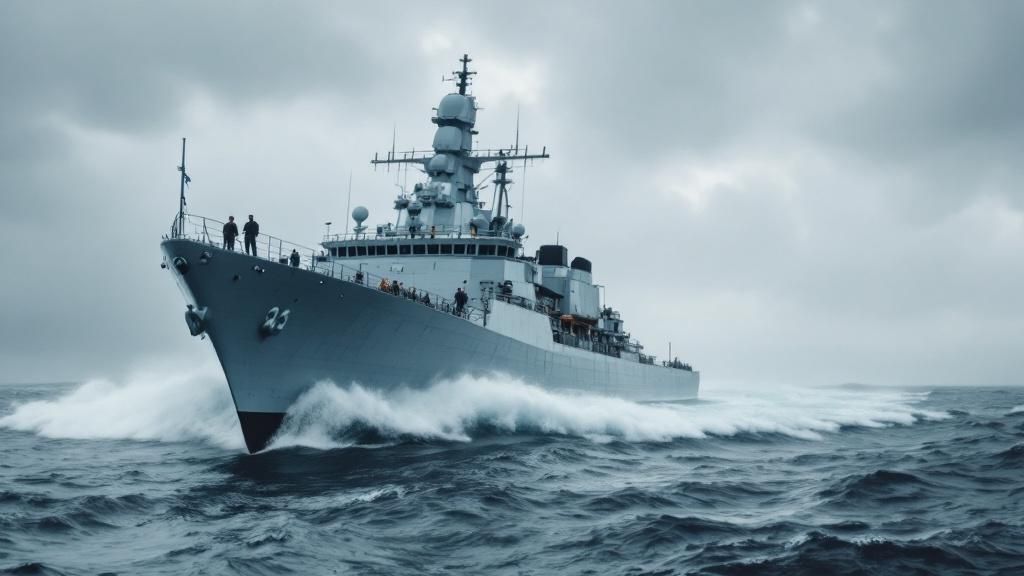
The Royal Navy is getting ready to board and detain Russian shadow fleet vessels operating in UK waters, after Prime Minister Sir Keir Starmer approved military action against the ships. Russia has been running vessels without valid national flags to evade international sanctions and continue funding its war in Ukraine. Ministers established a legal basis in January under the Sanctions and Money Laundering Act 2018 that allows forces to stop and hold the sanctioned vessels. The government believes approximately 75 per cent of Russia’s crude oil is carried on older vessels in the shadow fleet, with 544 vessels believed to be involved in the operation. Senior government officials have verified that specialist military units have finished preparation for the operation, with the first boarding expected to occur imminently.
The Covert Fleet Issue
Russia’s shadow fleet represents a complex system designed to evade sanctions that has allowed Moscow to maintain the export of crude oil whilst circumventing international restrictions intended to deprive its military apparatus of funding. These vessels, typically ageing tankers lacking valid national flags, have become critical to Russia’s ability to finance its invasion of Ukraine. The government estimates that approximately 75 per cent of Russian crude oil is transported by these ships, underscoring the scale of the problem. With 544 sanctioned vessels identified as part of the shadow fleet, the challenge facing British forces is substantial and demands careful coordination with partner countries.
The complexity of tackling the shadow fleet extends beyond basic detection and interception. Royal Navy personnel have already supported neighbouring countries such as Finland, Sweden and Estonia with surveillance and tracking operations in the past few weeks, demonstrating the global scale of the threat. Ship-tracking technology allows military planners to detect sanctioned vessels several weeks ahead of they enter UK waters, allowing sufficient time for tactical preparation. However, the possibility of boarding vessels with potentially armed crews requires specialist training and preparation. Senior armed forces units, such as the Special Boat Service and Royal Marines, have conducted comprehensive wargaming exercises to ready themselves for various scenarios and levels of resistance they may encounter.
- Ageing tankers functioning without valid national flags evade sanctions
- Government assesses 75 per cent of Russian oil uses shadow fleet
- 544 sanctioned vessels designated as part of the operation
- Ship-tracking technology detects vessels weeks before entering UK waters
Regulatory Structure and Strategic Approach
The government’s capacity to conduct military operations against sanctioned ships rests upon a meticulously developed legal foundation identified by government lawyers in the early part of this year. The 2018 Sanctions and Money Laundering Act has been determined to furnish the necessary legal mechanism permitting the deployment of armed force against vessels operating in UK waters that contravene international sanctions frameworks. This legislative structure enables the Royal Navy and connected military organisations to intercept and detain vessels without demanding extra parliamentary authorisation for each separate operation. The identification of this legal grounding marks a major development, enabling ministers to proceed with enforcement initiatives that would previously have confronted significant legal challenges.
Defence officials and military planners have been operating in partnership to identify which sanctioned vessels will become the first targets for boarding operations. Ship-tracking technology provides crucial intelligence, enabling authorities to observe the passage of flagged vessels and forecast when they will arrive in British waters with considerable accuracy. This advance warning allows operational teams to conduct detailed planning, working alongside intelligence agencies and ensuring that specialist units are deployed effectively. The strategic approach prioritises methodical preparation rather than reactive responses, enhancing the probability of successful operations whilst minimising risks to military personnel involved in the boarding procedures.
The Sanctions and Anti-Money Laundering Act
Government lawyers recognised the 2018 Sanctions and Money Laundering Act as the legal instrument permitting military boarding operations against sanctioned vessels in UK territorial waters. This Act provides the statutory authority necessary for armed forces to intercept and detain ships suspected of breaching international sanctions imposed upon Russia. The Act represents a previously untapped mechanism that allows for the enforcement of sanctions through military means rather than purely administrative or diplomatic channels. Its use against the shadow fleet demonstrates how existing legislation may be modified to tackle contemporary security threats and sanctions evasion tactics.
The identification of this legal basis happened subsequent to thorough investigation by legal advisers examining established laws and their relevance to illicit shipping operations. Earlier this year, British defence forces assisted American troops in capturing the Marinera oil tanker, which had allegedly transported oil for Russia, Iran and Venezuela in breach of sanctions. This successful collaborative action encouraged ministers to examine how British defence forces could independently lead comparable operations against sanctioned maritime assets. The regulatory structure now in place permits such operations to proceed with proper governmental authority and international legitimacy.
Military Preparations and Instruction
Specialist military units have undertaken intensive training exercises in recent months to ready themselves for boarding procedures against shadow fleet ships. These tactical simulations have concentrated on different potential situations, including confrontations involving armed crew members and opposition by crew members. The training regimen has been designed to furnish personnel with the strategic understanding and functional competencies needed to perform effective and safe boarding procedures in difficult sea conditions. Senior defence officials have verified that this comprehensive preparation phase is now complete, opening the door for active deployments. The focus of these exercises has extended beyond standard boarding methods to encompass negotiation tactics, medical response protocols, and contingency procedures for dealing with unforeseen opposition or risky circumstances aboard the target ships.
The selection of units involved in shadow fleet operations will depend upon the anticipated level of opposition expected from crews aboard individual vessels. Military planners are employing intelligence assessments and vessel-specific information to ascertain the suitable force composition for each operation. The Special Boat Service, recognised for maritime specialist operations, and the Royal Marines, skilled in amphibious and boarding procedures, are both expected to participate in these missions. The adaptable approach to unit deployment ensures that operations remain aligned with assessed threats whilst preserving operational effectiveness. Government figures are eager to emphasise that personnel participating have received thorough preparation and possess the expertise necessary to conduct these operations safely and professionally.
| Unit | Primary Role |
|---|---|
| Special Boat Service | Maritime specialist boarding operations |
| Royal Marines | Amphibious and boarding procedures |
| Royal Navy Personnel | Vessel monitoring and tracking support |
| Ministry of Defence Officials | Operational planning and coordination |
- Operational drills include handling of crew armed resistance and dangerous maritime conditions.
- Unit positioning based on intelligence-led assessments of specific ship threat profiles.
- Personnel have proficiency with safe boarding procedures and professional execution.
Cross-Border Collaboration and Broader Context
The British administration’s decision to intercept shadow fleet vessels constitutes a considerable intensification in efforts to enforce global trade restrictions against Russia’s petroleum commerce. Royal Navy staff have already delivered essential support to adjacent Scandinavian nations, such as Finland, Sweden and Estonia, in surveillance and detection of questionable ships navigating through the North Sea and Baltic regions. This collaborative approach underscores the shared commitment amongst northern European allies to disrupt Russia’s ability to circumvent sanctions imposed following its military incursion into Ukraine, demonstrating that shadow fleet interdiction is not merely a British concern but a collective security priority.
Prime Minister Sir Keir Starmer’s decision to approve armed intervention aligns with his attendance at the Joint Expeditionary Force summit in Helsinki, reflecting the government’s determination to maintain focus on the Russian threat despite latest geopolitical shifts in the Middle East. Ministers have stressed that disrupting Russia’s shadow fleet operations will substantially reduce funding for what Starmer termed “Putin’s war machine” and its “barbaric campaign” in Ukraine. The government’s assessment that roughly 75 per cent of Russian crude oil travels via aging shadow fleet vessels demonstrates the strategic importance of these interdiction operations to the broader sanctions regime.
The Integrated Task Force Initiative
The Joint Expeditionary Force consisting of military coalitions of northern European nations, delivers the structural foundation for collaborative efforts against illicit shipping activities. Starmer’s remarks at the JEF summit on Thursday is anticipated to emphasise Britain’s commitment to this multilateral approach whilst demonstrating the concrete measures being taken to enforce sanctions. The coalition’s combined maritime assets and information exchange systems enhance the effectiveness of tracking and intercepting sanctioned vessels, ensuring that Russia cannot exploit gaps in monitoring coverage across waters across Europe.
Political Weight and Objections
The government’s commitment to launching naval interdiction operations represents a substantial increase in Britain’s approach to addressing Russian sanctions circumvention, signalling the first time UK forces will actively intercept vessels in domestic waters. The move holds considerable political weight, showcasing the Prime Minister’s determination to maintain pressure on Moscow in spite of rival international crises requiring ministerial engagement. By approving these operations, the government conveys to partners and opponents alike that Britain remains committed to enforcing the global sanctions regime, cementing its standing as a key voice in orchestrating Western reactions to Russian military action in Ukraine.
However, the authorisation of military boarding operations has not been without scrutiny. BBC Verify’s analysis raised questions about the effectiveness of existing legal mechanisms, highlighting that dozens of sanctioned vessels had navigated the English Channel in the weeks following the identification of the Sanctions and Money Laundering Act as the statutory foundation for intervention. Critics have questioned whether the government’s approach sufficiently tackles the extent of shadow fleet activity, with some arguing that stronger international cooperation and stronger enforcement mechanisms may be necessary to meaningfully disrupt Russia’s oil trade and deprive its military operations of crucial revenue.
